The Centuries-old Flaw at the Heart of Generative AI

LLMs don’t know anything about anything and they simply can’t

In 2024, The California legislature passed SB-1047—a bill intended to reduce so-called catastrophic risk of AI. The companies that make and market LLMs, being private capitalist corporations, hated it—likely because it sought to impose real accountability and real transparency on them—and successfully lobbied Governor Gavin Newsom to veto it. Then last year, the legislature passed AB-1064—a much more modest bill that would require any company that marketed a chatbot to children to ensure that the chatbot “is not foreseeably capable of doing certain things that could harm a child, including encouraging the child to engage in self-harm, suicidal ideation, violence, consumption of drugs or alcohol, or disordered eating.” AI companies lobbied against it and Newsom vetoed it.

Why would a company be so resistant to this minimal regulation, especially when it was passed in the wake of Adam Raines’ death by suicide which seems to have been encouraged by ChatGPT? I don’t think it’s just a knee-jerk reaction against any regulation, because doing so in this case amounts to telling the public “we will not ensure that our product is safe for your children”—bad PR in an industry that has and needs excellent PR.

No, the reason is far simpler. The companies are resistant because they know that they could clear even the low bar that the passed bill sets forth. They know that they can’t make chatbots that adhere to any standard of behaviour, because in order to adhere to a standard you need to know what that standard is. But LLMs can’t know anything and their creators must know this at least subconsciously. And what’s worse, we all should have known this because it was spelled out in what might be considered the founding work of modern philosophy the 1781 tome The Critique of Pure Reason by Immanuel Kant.

Kant was not some futurist who predicted LLMs. Rather he was addressing an active philosophical debate of his time namely a debate between Empiricists like Hume and Locke and Rationalists like Decartes and Leibniz around the problem of objective knowledge.[1]Disclaimer: I’m not a Kant scholar. I’m a theoretical linguist who challenged himself to reading Critique. Based on secondary material, namely a helpful series of videos, I know that Kant … Continue reading The problem was that we are able to have objective knowledge—i.e. knowledge of objects—that must come from experience, yet the sense-data which is the source of that experience is insufficient for such objective knowledge. To give an example, as I write this I am sitting in a cafe at a table and there is an empty ceramic mug to the right of my laptop. In order to make such a descriptive judgment, I need objective knowledge of myself, the cafe, the table, the mug, an my laptop to say the least, and I have that knowledge because my senses tell me so. But what do my senses provide me?

In a given instant each of the millions and millions of your sense-receptor cells is sending a bit of information to your nervous system, reporting whether and it what way it is being stimulated.
And each subsequent moment those cells are reporting something new. The world as our senses report it is an ever-changing matrix of atomic bits of data, what Kant calls the manifold, yet we consciously experience it as consisting of unified objects which persevere in time and interact with each other in lawful ways. These are two seemingly incompatible descriptions of the world yet, as the debate between empiricists and rationalists shows, both seem roughly correct.

So, does the world consist of a manifold of appearances constantly in flux or a unified lawful domain of permanent objects? Kant answers “yes.” For Kant, the manifold of appearances and the unity of our experience reflect different aspects of the world, both of which are real.

But how can we take appearances from our senses and extract objects from them? We must carry with us the tools to do so, to go from sense to understanding. For Kant these tools are the very notions of space and time, and The Categories—a set of minimal concepts that we use to construct the concepts we use to identify objects. Without these, experience is impossible, and without experience, knowledge is impossible.

An important thing to note here is that these tools, being necessary for experience, cannot be given in experience. Take, for instance, our sense of space. Part of how I can recognize that myself, the table, the mug, and the laptop are distinct objects is because they, or perhaps more accurately their sensible appearances, occupy distinct regions of space. Restricting myself to the visual appearance of the mug and oversimplifying—there are is a set of photo-receptor cells that occupy a contiguous region in my retina, and each of those cells is reporting being stimulated by whitish light.The information that cells x, y, z, etc are being stimulated is certainly data we did not have before, but the fact that those cells represent a contiguous region must be something I “knew” beforehand, if only because the position of a photo-receptor in a retina is given by my very biology. Likewise, when we consider time, we find that our judgements of time cannot be given by external data, but have to come from our own internal sense of our sensory data being constantly updated.

The Large Language Models which are what we usually mean when we talk about AI these day do not have in-built categories nor nor do they have any sense of space and time. They simply have inputs and math that is performed on those inputs. Lacking the tools necessary for experience, they can’t have any and being unable to experience anything can’t know anything. And therein lies the impossible bind that any regulation would place AI companies in.

Can we build an LLM that will not encourage children to harm themselves or others? In order to do this, an LLM needs to be able to make a judgement that a statement is an encouragement to self-harm and such a judgement requires knowledge of objective concepts of “harm,” “self,” and even “statement” and an LLM cannot have such knowledge. And the same reasoning explains why we can’t build an LLM that will not generate CSAM, that will not cause psychosis, and so on.

Such a conclusion likely strikes folks as a bit far-fetch, perhaps because we are used to websites being able to filter out certain types of content by default—Google, for instance, doesn’t surface NSFW pages unless the user turns off safe search, and doesn’t surface illegal pages at all. Why then, can’t we do so with LLMs? If it’s because LLMs can’t know anything, does that mean I’m saying that Google’s search algorithm can know things? Certainly not, but Search engines and other traditional websites are based on a database and as such can at least represent knowledge and people can build algorithms that use that represented knowledge.

Suppose you are building a search engine. You’ve crawled the entire web and placed every page into a database including some metadata that you deem useful in finding the best pages.
You’ve also created an algorithm for analyzing a query and ranking all your pages by how well they match the query. You open it up to the public and it works! Users are generally happy with the results, but you start to get complaints that unwanted results are showing up—porn, hate sites, depictions of violence, or the like. The solution is relatively simple—add some metadata to your database that indicates whether each page belongs to a particular category of potentially unwanted results and adjust your algorithm to check for this metadata before serving these results.

The devil is in the details, of course, in that as simple as it is to add the relevant metadata to a database, correctly and reliably categorizing each page accordingly is thorny to say the least. It brings in a number of grey areas, depends on value judgments, and is difficult to scale so it is error-prone, but it is possible in principle because humans directly encode the possibility of representing objective knowledge into the software. An LLM, though, does not store responses or pages, or facts in a database that can be directly modified—LLMs can’t even represent knowledge.

This distinction between LLMs and classic web apps cannot be lost on any competent engineer that would be tasked with building “guardrails” for chatbots. So, it is very likely that companies that build chatbots know that we cannot build those guardrails yet even without familiarity with 18th century philosophy. But given that critical philosophy/thinking seems to be anathema to the ever more reactionary tech sector, they likely don’t know, or aren’t allowed to admit, that they will never be able to build such guardrails.

It’s no surprise, then, that LLM makers would put so much lobbying effort and, by extension, money into fighting even the most reasonable regulations like “don’t build a chatbot that will encourage child suicide,” because it would force them to admit that they cannot possibly clear so low a bar.

But as bad as it is that LLMs cannot be restrained from being positively harmful, the impossibility of them having objective knowledge is a death knell for any hopes for their benefits. If you asked a normal person what they would hope an AI or a Robot would do for them, likely they’d want a machine to do chores around the house, work dangerous jobs, and give them more time “to knit sweaters, play with their dogs, start a garage band, experiment with new recipes, or sit in cafés arguing about politics, and gossiping about their friends’ complex polyamorous love affairs” (to borrow a formulation from the late David Graeber). LLMs, however, will never be able to do this even if they are given physical bodies. Because how can you trust an AI to wash a dish if it cannot even conceive of the possibility of a dish, let alone know what a dish is?

But, of course, the billionaires who sell, fund, and promote LLMs don’t have to do household chores, or dangerous jobs, so they don’t care if their AIs can do those tasks. Instead, they are promoting LLMs ability to write, to code, to make images, and so on. On their face, these might seem like possibilities as an LLM does nothing but generate formally correct outputs—they can string together words into grammatically acceptable sentences, or symbols into syntactically correct Python expressions. But anything we create of any value, be it text, or code, or images, has not only form, but content and function, both of which implicate objective knowledge. To write well, you need to create well-formed sentences, but you also need to choose the right words based on knowledge of their semantics. To write a good program, you need to know what you want it to do—how you want it to affect the world. You need knowledge of the world that LLMs cannot have.

This, of course, hasn’t stopped them from degrading our working conditions and firing us. Your livelihood has no doubt been negatively affected by LLMs. Brian Merchant has been gathering stories of the real life effects of LLMs. And as Cory Doctorow puts it “even though an AI can’t do your job, an AI salesman can convince your boss to fire you and replace you with an AI that can’t do your job.” So what can we do with the understanding that LLMs will never ever be able to do our jobs? I’m not naive enough to believe that we can convince the bosses of this, of course. But there’s value in holding this knowledge ourselves as a form of intellectual self-defense. They desperately want us to believe that an AI can do our job, that there is no alternative, that we should gladly welcome our new chatbot overlords. They want this because if we believe the opposite, then we might get it in our heads to organize and resist.

Notes

Notes
↑1 Disclaimer: I’m not a Kant scholar. I’m a theoretical linguist who challenged himself to reading Critique. Based on secondary material, namely a helpful series of videos, I know that Kant was less interested in epistemology and psychology than in metaphysics.

My Top Culture Things of 2024

As in years previous, I’d like to give a rundown of the top things in culture for me in 2024. As in those previous years, this is not a list of things that were released in 2024, but things that I encountered, or finally got around to in 2024.

2024, however, was not a normal year. The entirety of the year there has been an ongoing genocide being live-streamed. I, like many of you, have watched as Israel has targeted Palestinian children, women, journalists, doctors and nurses as part of their attempt to finally push the Palestinian people off what remains of their land. I have watched as the countries of the Global North, including my country of Canada, have turned a blind-eye to the crime-of-crimes, while doing everything in their power to crack down on any voices that object. To say this cast a pall on the year would be an understatement.

Arms Embargo Now! Sanction Israel! Saoirse don Phalaistín!

Now, if you’re still reading, these are the cultural things that brought be some joy, or helped me cope in this bleak year.

Sonic Ranch by The Sloppy Boys

This year the comedy-party-rock trio The Sloppy Boys released their fourth album. In something of a twist, they eschewed their normal path of self-producing and instead, took a trip out to storied recording studio in San Antonio—the titular Sonic Ranch—and had their album produced by Money Mark.

The result is fantastic! It’s no surprise that the Boys brought the funny to every song, and the funny is amplified by the fact that their silly jokes are set to music of the highest production value.

Best enjoyed alongside the making-of film Blood Sweat and Beers directed by Robert Holguin.

Station Eleven

(book by Emily St John Mandel/miniseries by Patrick Somerville)

File this one under “finally got around to it.” The book and the miniseries begin with two simultaneous events—the sudden on-stage death of world-famous actor, and the onset of a flu pandemic that will wipe out a large portion of humanity. It then follows the post-disaster fortunes of three characters who are connected through the dead actor, while giving flashbacks to their pre-disaster lives. There’s plenty to say about these works but what struck me the most about both, but especially the novel, was their portrayals of pre-disaster (i.e., our present) reality. Without banging the reader/viewer over the head, the author/director show deeply sad, frustrated and alienated our their lives are were.

At the risk of sounding like a snob, the novel is better though. I can’t wait to read more from St John Mandel!

The Third Revolution by Murray Bookchin

Originally published in the 90s as a two-volume history of the centuries of revolution that ranged from the late middle ages into the end of the 19th century, The Third Revolution tells the stories of the great revolutions with a particular focus on popular, rather than liberal, forces. So rather than pitting Cromwell against Charles I, Washington against George II, Robespierre against Louis XVI, Bookchin highlights the Levellers, Thomas Paine, and Jean Varlet.

He later followed up his two volumes with a third—which I’m currently reading—covering the Russian Revolutions and a fourth covering the German and Spanish revolutions.

The Past Is Still Alive by Hurray For The Riff Raff

Another stellar album from Alynda Segarra, the non-binary Nuyorican singer-songwriter behind Hurray For the Riff Raff. In it they reflect on their past—old friends and lovers, hitchhiking, etc.—in maybe their most bittersweet record yet.

Kneecap (dir: Rich Peppiatt)

It’s like Twenty Four Hour Party People but its about a very current group, and the group members play themselves, and they’re pretty damn good actors. Oh, and it’s about half in Irish, and has a strong political message, and much more drugs, and Michael Fassbender’s in it. Seriously there’s no good way to describe the film Kneecap without making it sound pretty bonkers, which it is, but it works.

Whatever you do though, don’t let Mo Chara, Móglaí Bap, DJ Próvaí fool you, they may be drug-dealing ‘low-life scum’ (their words) but they have a well-defined language revitalization framework.

Anora (dir: Sean Baker)

In Notes From The Underground Dostoevsky demolishes what was a common trope of his time—the romantic hero redeeming a sex worker. Anora pulls that trope inside out. Vanya (Mark Eidelstein), a spoiled son of Russian oligarchs compulsively marries Ani (Mikey Madison), a brash Brighton Beach sex-worker. In response, Vanya’s parents send some bumbling goons after them to get an annulment. It’s funny, sexy, genuinely moving. It’s clear that Baker loves his characters even Vanya the spoiled brat is lovable in his self-awareness. Mikey Madison is a revelation, but don’t sleep on the goons.

Honourable Mentions

War and Peace (1966-67; dir: Sergei Bondarchuk)

I worked my way through the Soviet five-part 7+hr adaptation of Tolstoy’s greatest work this year. It definitely comes the closest to capturing the blend of mystical romanticism and realism that characterizes the book. Someone once remarked that, though they were subject to greater explicit political censorship, Soviet film-makers, in many ways, enjoyed greater artistic freedom than their Hollywood counterparts. This film demonstrates that.

Blood in The Machine by Brian Merchant

A history of the Luddite uprisings, with some literary analysis of English romantic/gothic literature thrown in for good measure. A perfect parable for our present tech-landscape

Paradise Built in Hell by Rebecca Solnit (2009)

Another history, this time of post-disaster communities. Solnit covers the aftermaths 1906 San Francisco earthquake,the 1917 Halifax explosion, the 1985 Mexico City earthquake, 9/11, and Hurricane Katrina in New Orleans. She shows that, contrary to common image of riots, violence, and looting, the aftermaths of disasters usually involve survivors spontaneously organizing to help each other, that is until the police or military show up and start violent riots to restore order. I don’t know if I read this before or after Station Eleven but the two definitely resonate with each other

Fucked Up’s live show

This was my first time seeing them live and what a show! I didn’t expect a hardcore show to include a brief acoustic set in the middle and an extended jam session at the end, but if anyone can do it it’s them.

My Top Culture Things of 2022

It’s the end of 2022 and I’ve got nothing else to do, so I thought I’d share some of the works of culture that really made my year (even including things that weren’t made in 2022).

I did one of these before in 2019, but something happened (and continues to happen) and I missed the following two years, so a couple of these might be things I discovered in 2020 or 2021 but continued to really enjoy this year.

The Revolutions Podcast by Mike Duncan

The first episode or Revolutions came out in 2013 the series finale was just released on Christmas day of 2022. I started listening to it this year and managed to go through the entire catalogue. It’s a sprawling look at the revolutionary period that was kicked off by the English civil wars and ended with the Russian Revolution, including the revolutions in the US, Central/South America, Haiti, and Mexico, the several revolutions in France, and the revolutionary uprisings in 1848. I was initially skeptical of the idea of an American podcaster recounting revolutions, fearing it might end up being nothing but simplistic narratives, but I was pleasantly surprised by the nuance and detail that Duncan draws out of these histories. He covers the historical, political, and even ecological factors that shaped revolutions, and draws interesting connections and parallels between seemingly unrelated revolutions. If I had one critique it would be that, while Duncan certainly doesn’t endorse a Great Man theory of history, he does, in my opinion, give fairly short shrift to popular movements that lack a charismatic leader—anarchists in the Russian Revolution, Anti-Federalists in the US, The Diggers in the English civil wars, to name a few. This is certainly an unfair critique stemming from my own biases, and it in no way detracts from my enjoyment of the podcast.

Orwell’s Roses by Rebecca Solnit

“In the spring of 1936, a writer planted roses.” This is the opening line of Orwell’s Roses, and in some ways the puzzle that its author Rebecca Solnit is trying to solve—why would an apparently grim pessimist like Orwell bother with planting something as apparently frivolous as roses? The book is an exploration of both Orwell and roses and a refutation of their reputations as being grim and frivolous respectively. Solnit’s almost stream-of-consciousness style of writing belies the fact that she’s making an argument and backing it up with research and reason. The argument seems to be a perennial one on the left as to what place the non-material welfare of people should matter—should leftists be concerned with beautiful things like roses, or are such concerns ultimately bourgeois? Solnit is decidedly on the side of roses, and argues that Orwell was too.

The book somehow manages to be extremely readable but dense, poetic but journalistic . Definitely worth it.

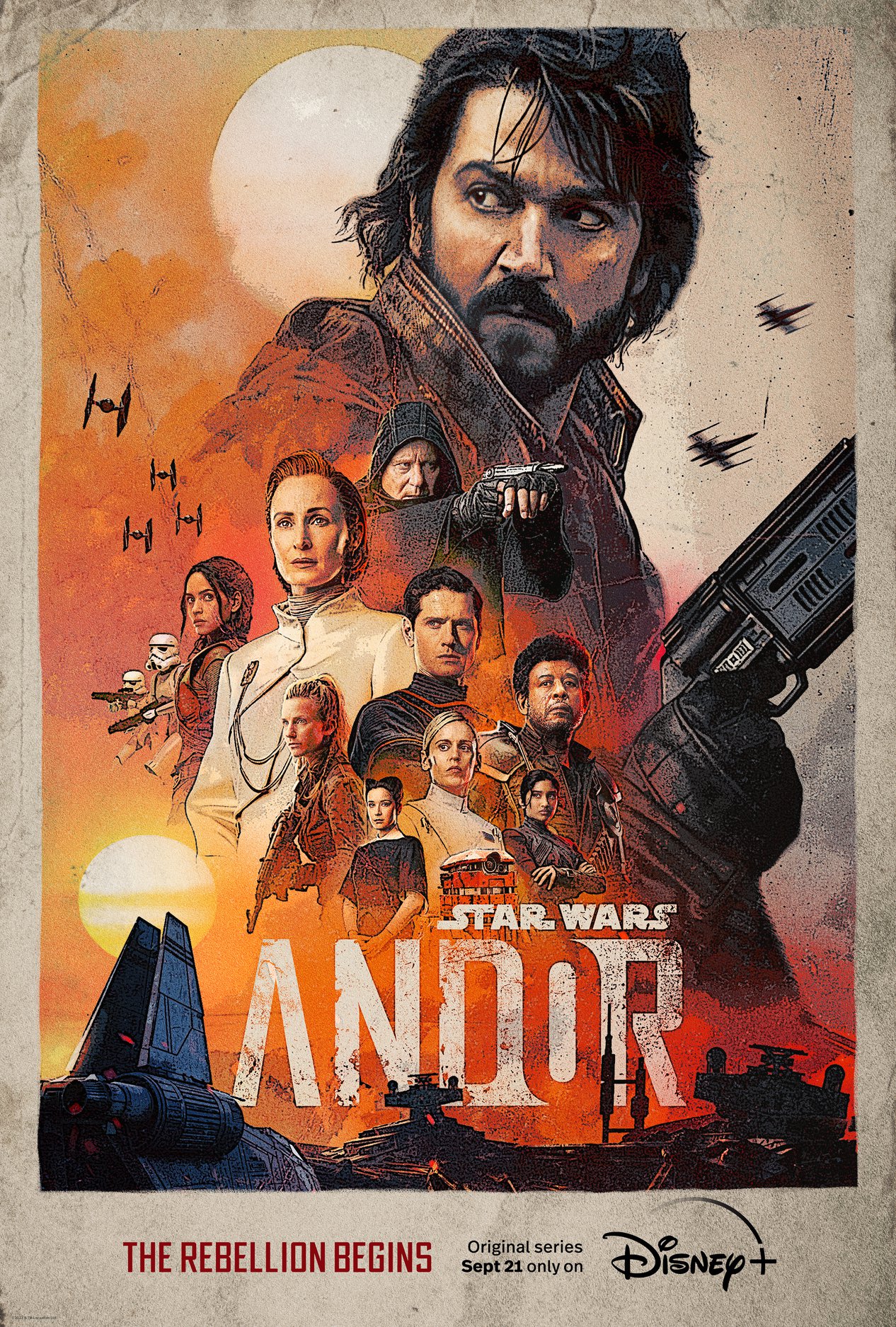
Andor

I’ve been pretty much done with Star Wars for a few years now. I didn’t see The Rise of Skywalker and other than The Mandolorian—which I watched because I was out of things to watch in lockdown and would describe as “fine”—I’ve steered clear of the streaming shows. So when I heard they were making a series about the origin story of the second lead in Rogue One—A film I enjoyed—I thought “wow, they’re really scraping the bottom of the barrel here”, and boy was I wrong! Everything about the show feels fresh, its links to the Star Wars canon are so tenuous that it could almost not even be a Star Wars series, and it definitely has something to say. Even the choice of protagonist—Cassian Andor, the petty thief transformed into a revolutionary—is interesting precisely because, as Alan Sepinwall notes, Cassian might be the least compelling character in the show. But while Sepinwall sees this as a flaw, I can’t help but see it as a secret weapon. Because Cassian doesn’t hog the screen, the secondary and tertiary characters get to have their say and make their perspectives known. Andor, much like The Wire—a comparison already made by David Klion—is ultimately a social drama. It’s much more interested in exploring the links between capitalism, imperialism, colonialism and fascism, and the nuances of resistance and rebellion—the showrunner, Tony Gilroy, apparently listens to the Revolutions podcast—than any individual relationships, though it doesn’t shy away from exploring the personal impacts of the social.

Actual critics have done the show more justice than I can, but one last thing I want to highlight is the score by Nicholas Britell, which has the epic orchestral sweeps that you’d expect but also jarringly centers a wobbly detuned synth for much of the score, highlighting the fact that the world of the show is rather shaky—teetering on the brink of collapse. Again, really not something I expected from a Star Wars franchise.

The Sloppy Boys Podcast/The Blowout

The Sloppy Boys are a comedy party rock band consisting of Jeff Dutton, Mike Hanford, and Tim Kalpakis, all former members of The Birthday Boys sketch group. In 2020, just when COVID hit, they released their third album Paradiso, and without the possibility of touring to promote the album, they decided to start a cocktail podcast. Tale as old as time, really.

The premise of the show is simple: every week, the Boys make a new cocktail—the Trinidad Sour was an early classic—and talk about it. Add to that the fact that these are three good friends and some of the funniest guys on the planet and they legitimately make each other laugh and you’ve got an excellent podcast. They also have a second show The Blowout available to Patreon subscribers—patróns in the parlance of the show—where they talk about whatever they want—best guitar solo, taking a bath, going to the mall, the 80s movie Gremlins, the best Christmas aspect, to name a few. It’s sometimes truly the thinnest of premises but Jeff, Mike, and Tim always manage to make it great!

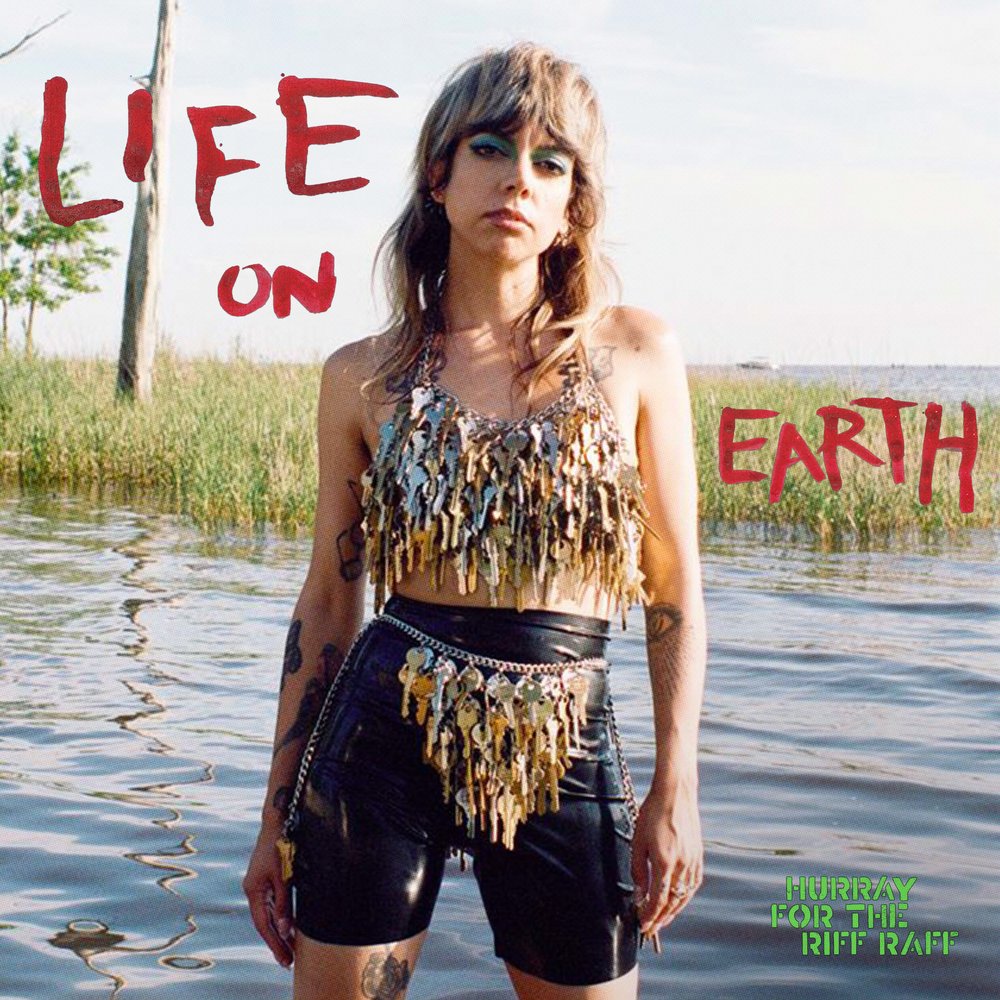
LIFE ON EARTH by Hurray For The Riff Raff

Hurray For The Riff Raff is the musical project of Alynda Segarra, a singer-songwriter originally from The Bronx, who formed the band when they moved to New Orleans. I first encountered Hurray For The Riff Raff in their 2017 album The Navigator—an album which you should absolutely seek out—and they released LIFE ON EARTH this year. While The Navigator was big and overtly political, LIFE ON EARTH kind of snuck up on me. It’s a smaller sort of album and much earthier than its predecessor—with titles like “WOLVES”, “RHODODENDRON“, “JUPITER’S DANCE” and “ROSEMARY TEARS“—but not devoid of politics—”PRECIOUS CARGO” tells the story of a migrant coming across the US/Mexico border only to be abused by US authorities. I don’t think it got much press, but when I was reviewing the music I’d listened to this year, I realized LIFE ON EARTH had really wormed its way into my rotation as one of my familiar records, even though it’s less than a year old.

Honourable mentions

The Time of Monsters Podcast with Jeet Heer.

Jeet Heer is a Canadian journalist and critic. On his podcast he talks with other commentators about some current topic in the news, politics, or culture.The podcast is also completely unpolished, which very much adds to its charm.

Everything Everywhere All at Once

A wonderfully unique movie amid what’s become the standard fare of Disney-owned IP and other studios trying to emulate/compete with Disney. Any attempt to describe the plot would do it a great disservice, so all I can say is you should watch it if you can.

Roses by Jadea Kelly

I met Jadea in undergrad where she would often perform at our college open mic. She was clearly talented so when she sent out a Kickstarter request to help fund her next album I was happy to throw in a few bucks. Flash forward several years to 2022, when I get notified that her album is complete and a CD is on its way to me. I didn’t know what to expect, but I was completely floored by what I heard—well-written songs with mature poignant lyrics beautifully performed and produced. An early standout and still one of my favourite tracks: “When I Fly”

Dan Padley

A jazz guitarist out of Iowa City IA, I met Dan through the Sloppy Boys discord server. He released an excellent solo EP this year as well as an LP with Jarrett Purdy, both are well worth a listen. He also regularly posts cool guitar covers of whatever songs he feels like on his Instagram and Youtube channel.